
Platelet-Rich Plasma Therapy
PRP Hair Treatment in Visakhapatnam
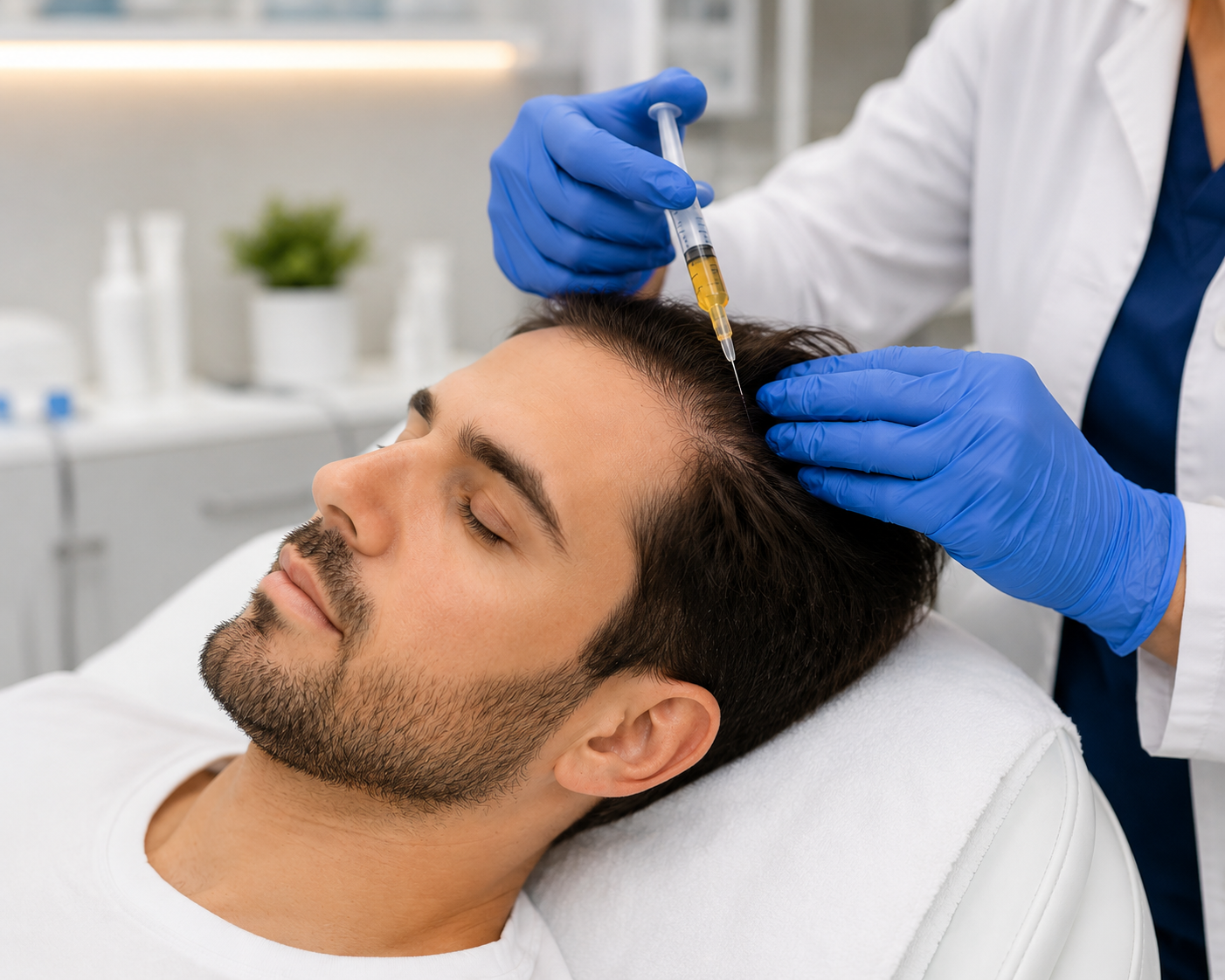
Platelet-Rich Plasma (PRP) therapy uses a concentrated fraction of your own platelets to reawaken miniaturised follicles, slow shedding and improve hair calibre. It is the most widely studied non-surgical treatment for androgenetic alopecia and remains a cornerstone of our medical hair loss programme.
- Session time
- 45 minutes
- Sessions advised
- 4 – 6 monthly, then maintenance
- Downtime
- None
- Anaesthesia
- Topical numbing cream
- First results
- 8 – 12 weeks
- Best for
- Early thinning, telogen effluvium
What is PRP hair treatment?
PRP is an autologous therapy: the material injected into your scalp comes from your own body. Blood is drawn, spun in a centrifuge to separate its components by density, and the platelet-rich layer is isolated. That layer contains platelets at three to six times their normal blood concentration, along with the plasma proteins that support tissue repair.
Platelets are best known for clotting, but they are also biological repair signals. Inside each platelet are alpha granules packed with growth factors that the body uses to heal injured tissue. Delivering a high dose of those platelets into the dermal layer of a thinning scalp harnesses a natural repair mechanism and applies it to the hair follicle.
PRP is not a cure for genetic hair loss. It is a maintenance and enhancement therapy that works best when hair loss is caught early, when follicles are miniaturised rather than lost, and when it is combined with correct medical management.
How PRP stimulates hair growth
Once injected, platelets degranulate and release their growth factor payload into the tissue surrounding the follicle. Several mechanisms then act together.
Angiogenesis
New microvessels form around the follicle, increasing the blood supply that a growing hair depends on.
Anagen prolongation
Follicles are pushed from the resting phase back into active growth and stay there longer.
Dermal papilla activation
The cells that dictate hair shaft thickness are stimulated, so regrown hair is coarser.
Anti-apoptotic signalling
Pathways that promote premature follicle cell death are down-regulated.
Reduced perifollicular inflammation
Chronic low-grade inflammation around miniaturising follicles is calmed.
The PRP treatment process
The full appointment takes under an hour from arrival to discharge.
1. Consultation and trichoscopy
Baseline photographs and density measurements are recorded so progress can be objectively compared.
2. Blood collection
About 15 to 20 ml of blood is drawn into anticoagulant tubes.
3. Centrifugation
A double-spin protocol concentrates the platelets and removes excess plasma.
4. Numbing
Topical anaesthetic is applied to the treatment zones for 20 to 30 minutes.
5. Injection
PRP is injected into the dermis using fine needles in a systematic grid, with additional passes over the most affected areas.
6. Aftercare
Avoid washing for six hours, and avoid swimming, alcohol and strenuous exercise for 24 hours.
Benefits of PRP therapy
PRP earns its place because it is safe, quick and evidence-backed.
Non-surgical and needle-only
No incisions, no stitches and no scarring.
Reduces shedding early
Most patients notice less hair fall within two to three sessions.
Improves hair calibre
Existing thin hairs grow back thicker, which visually increases density.
Complements transplants
Improves the environment for grafts and protects surrounding native hair.
Safe for women
A valuable option for female pattern hair loss and post-partum shedding where oral medication may not be suitable.
No systemic side effects
Because the material is autologous and applied locally, it avoids the systemic concerns of oral therapy.
Recovery and expected results
There is no downtime after PRP. Slight tenderness or a heavy feeling in the scalp for a few hours is normal, and most patients drive themselves home and return to work immediately.
Objectively, published studies report increases in hair density in the range of 20 to 30 hairs per square centimetre after a full course in appropriately selected patients. Subjectively, patients usually describe reduced fall first, then a thicker feel to the hair, then visible coverage at the part line.
Results are maintained rather than permanent. Because androgenetic alopecia is progressive, a maintenance session every four to six months, combined with topical or oral therapy where indicated, is what preserves the gain over years.
Answers
PRP Hair Treatment — FAQs
Ready to see what your hair can look like again?
Book a consultation with our hair transplant surgeon for a trichoscopic assessment, an honest graft estimate and a written treatment plan.